Coordinated water mitigation, moisture mapping, drying, documentation, and repairs for multi-unit properties.
Water damage in condos and strata buildings is rarely limited to one room or one suite. A plumbing loss can move through ceilings, shared walls, service penetrations, and floor assemblies, affecting neighbouring units or common property. Novaco provides coordinated restoration for condo owners, strata councils, and property managers across Greater Vancouver.
1. Notify the appropriate building or strata contact. 2. Stop the water source if it is safe. 3. Document visible damage in each affected area. 4. Arrange moisture checks in adjoining and lower units.
Water can pass through building assemblies and affect several parties at once: the source unit, suites below, neighbouring units, common walls, corridors, or shared services. Access and documentation often need to be coordinated across more than one space.
A clear restoration plan should identify which areas are actually wet, separate owner and common-property work where required, and keep drying and repair records organized for everyone involved.
Leaks From Units Above
Water from bathrooms, kitchens, appliances, or plumbing can migrate into ceilings and walls of lower suites.
Shared Plumbing Failures
Building risers, drain lines, or common piping can affect multiple suites and common areas.
Appliance & Fixture Losses
Dishwashers, washing machines, toilets, tubs, and sinks can release water into floors and neighbouring assemblies.
Common-Area Water Damage
Mechanical rooms, corridors, parkade-related spaces, and shared building systems can create complex restoration scopes.
One Restoration Plan Across Multiple Affected Areas
Multi-unit water losses require more than individual room cleanup. The restoration plan needs consistent moisture assessment, coordinated access, drying across affected suites, and documentation that clearly shows the condition of each area.
01 — Coordinate
Confirm access, involved parties, and the areas that may require inspection or mitigation.
02 — Map Units
Check the source suite, adjoining assemblies, units below, and common areas for moisture migration.
03 — Dry & Repair
Manage drying and reconstruction in a coordinated sequence across the affected property.
What We Check in Condo & Strata Water Losses
Water paths in multi-unit buildings do not always follow room boundaries. We assess the source area and check neighbouring assemblies to determine whether moisture has moved into ceilings, shared walls, flooring systems, or common property.
We typically assess:
✓ Source suite and adjoining rooms ✓ Units below or beside the loss ✓ Ceilings, walls and floor assemblies ✓ Common property and service areas ✓ Flooring, cabinets and built-ins ✓ Access requirements for drying and repair
Our Condo & Strata Water Damage Process
Condo and strata restoration works best when assessment, access, drying, and documentation are organized from the beginning. We define the affected areas, coordinate mitigation across units, monitor moisture, and move each area into repair once drying is complete.
1. Coordinate
Confirm access, building contacts, source information, and the likely affected areas.
2. Assess Units
Inspect the source suite and check adjacent or lower areas for moisture migration.
3. Mitigate
Extract water and remove materials only where necessary for safe, effective restoration.
4. Dry & Monitor
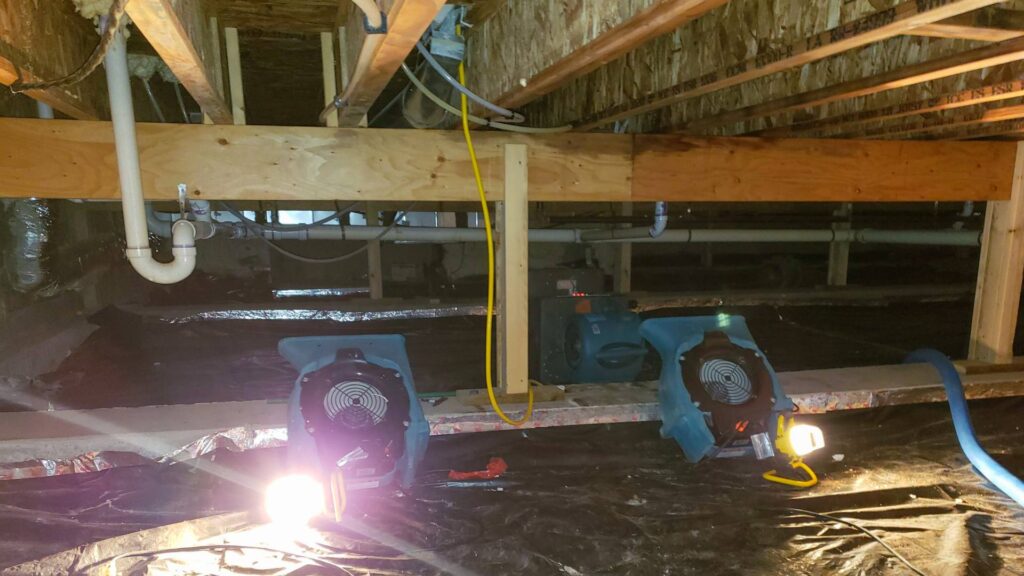
Dry affected assemblies and record moisture progress across the involved areas.
5. Repair
Restore finishes in the affected suites or common areas according to the approved scope.
Water Can Move Between Suites Before It Is Visible
A small stain in one unit can be the end point of a much larger moisture path. Water may travel through service penetrations, insulation, floor assemblies, and common walls before appearing on the surface, which is why multi-unit losses require systematic moisture checks.
Documentation for Owners, Strata & Property Management
Multi-unit projects involve more communication than a typical single-family loss. We document which suites and common areas were inspected, where moisture was found, what equipment was installed, and what restoration work was completed in each area.
Clear photos, moisture records, and monitoring notes help owners, strata representatives, property managers, and insurers understand how the loss developed and how each affected area moved from mitigation through repair.
Unit-by-Unit Moisture Mapping
Document affected suites, common areas, and the specific assemblies requiring drying or access.
Project Photos & Monitoring
Track conditions and drying progress separately for each affected area.
Coordinated Repair Completion
Record the transition from mitigation to repairs across suites and common property.
Frequently Asked Questions
What should I do if water is leaking from the unit above?
Notify the strata or building contact, protect belongings, document visible damage, and avoid electrical hazards. Even after the visible leak stops, moisture may remain in ceilings, walls, insulation, or flooring.
Can one condo leak affect several units?
Yes. Water can travel through floor assemblies, service penetrations, wall cavities, and ceilings, affecting units below or adjacent to the source.
Do you coordinate with strata councils and property managers?
Yes. We can coordinate access, moisture assessment, drying, documentation, and repairs with owners, strata representatives, concierge or building staff, and property managers.
How do you determine which units need inspection?
We consider the source location, building layout, visible damage, and likely water pathways, then use moisture testing in adjoining or lower areas where migration is possible.
Can common property be affected by a suite leak?
Yes. Depending on the building, water can affect common walls, ceilings, corridors, service chases, and other shared assemblies.
Who is responsible for the cost of condo water damage?
Responsibility depends on the strata bylaws, insurance policies, source of the loss, and other circumstances. Novaco documents restoration conditions and work but does not determine legal or insurance responsibility.
Can you dry multiple suites at the same time?
Yes. When several suites are affected, drying equipment and monitoring can be coordinated across the involved areas according to each unit’s moisture conditions.
Do you provide documentation for strata insurance claims?
Yes. We can document affected units, common areas, moisture readings, photos, equipment use, monitoring, and restoration work. Coverage is determined by the insurer.
Can flooring be saved after a condo leak?
Sometimes. The decision depends on flooring type, water source, saturation, underlay, subfloor moisture, and how quickly restoration begins.
Can water damage remain hidden inside condo ceilings?
Yes. Moisture can remain above drywall, around insulation, or near service penetrations after the visible dripping stops. Moisture testing helps identify those concealed areas.
Do you handle sewage backups in strata buildings?
Yes. Contaminated-water losses require additional isolation, cleaning, sanitization, material removal, and drying procedures.
Can condo water damage lead to mold?
Yes. Moisture trapped in walls, ceilings, flooring, or insulation can support mold growth if materials remain damp.
Do you restore water damage in strata common areas?
Yes. We can provide mitigation, drying, documentation, and repairs for corridors, shared rooms, common walls, and other affected common areas.
Can Novaco complete repairs in each affected suite?
Yes. After drying is complete, Novaco can restore drywall, insulation, flooring, baseboards, paint, and other finishes according to the approved repair scope.
Condo or Strata Water Damage?
Call Novaco for coordinated multi-unit water mitigation, moisture mapping, drying, documentation, and repairs across Greater Vancouver.