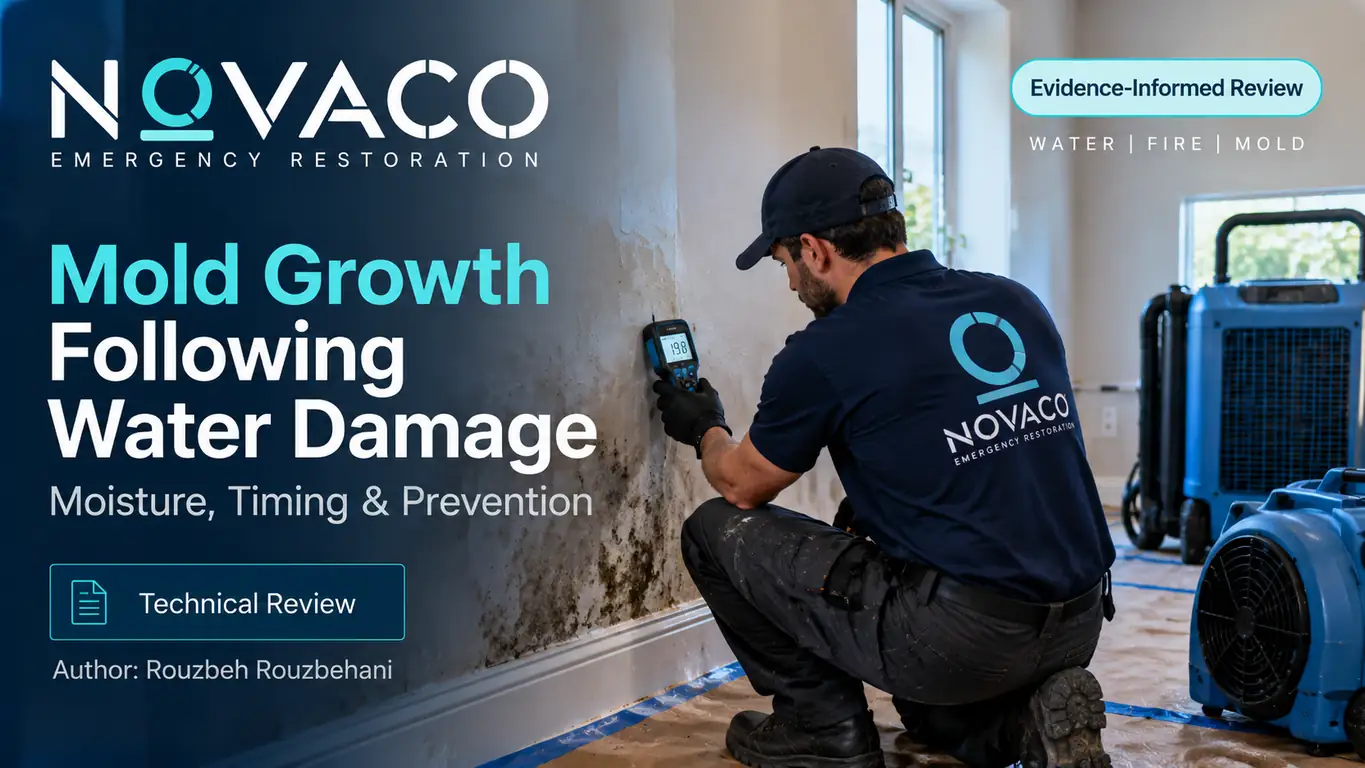
Moisture Exposure, Time-Dependent Risks, and Evidence-Informed Prevention
Affiliation: Novaco Restoration & Construction Ltd., British Columbia, Canada
Article type: Technical narrative review
Publication date: January 5, 2026
Download Technical Review (PDF)
Abstract
This technical narrative review examines the relationship between water intrusion, prolonged moisture exposure and mould growth in residential building assemblies, with particular relevance to coastal British Columbia. Public guidance from the U.S. Environmental Protection Agency (EPA), Centers for Disease Control and Prevention (CDC), World Health Organization (WHO), and professional water-restoration principles is synthesized to distinguish preventative response windows from experimentally established microbial growth times. Moisture availability, material composition, temperature, exposure history, drying access and contamination all influence microbial risk. The often-cited 24–48-hour period is best understood as a practical priority for prompt drying rather than a universal biological threshold or a guarantee that visible mould will appear. A decision framework based on source control, moisture mapping, material evaluation, safe drying, reassessment and documented verification is presented. The paper is a narrative synthesis and does not claim original sampling, controlled experiments or measured field outcomes.
Keywords: mould growth; water-damaged buildings; moisture exposure; microbial amplification; indoor dampness; drying; building materials; Vancouver; moisture mapping.
1. Introduction
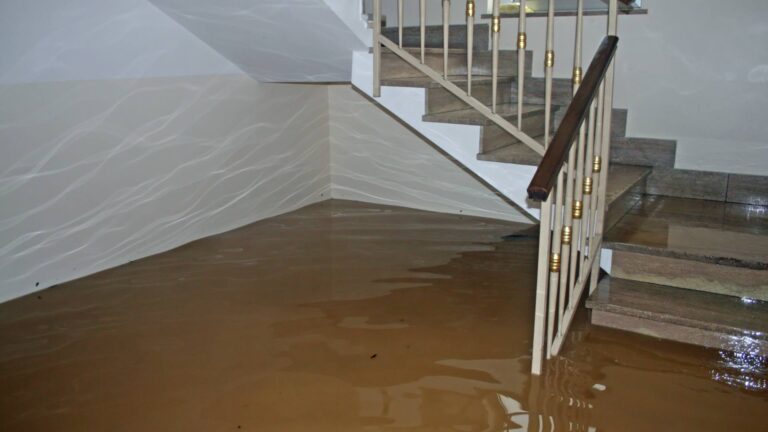
Water damage is a common building-management concern in Vancouver and coastal British Columbia, where rainfall, moisture-laden outdoor air, below-grade spaces and diverse construction assemblies can complicate moisture control. Plumbing failures, appliance leaks, roof intrusion, flooding and condensation may wet porous building materials. Liquid water may disappear from view while moisture remains behind finishes, within insulation or beneath floor coverings.
Mould is neither inevitable after every short water event nor prevented simply because a surface looks dry. Fungal spores are widely present in indoor and outdoor environments; growth depends principally on suitable moisture and environmental conditions. Persistent dampness and microbial growth are associated with adverse indoor-environmental and respiratory outcomes, as summarized by WHO [1]. This association should not be interpreted as proof that every instance of water damage causes illness.
The earlier version of this Novaco article offered an accessible homeowner explanation. This revised technical review separates established moisture-control guidance from assumptions about precise growth timelines and proposes a more defensible response process.
2. Review Scope and Method
This paper is an evidence-informed narrative review. Sources were selected for relevance and public accessibility: WHO guidance on dampness and mould [1], EPA guidance on mould remediation and moisture control [2–4], CDC recommendations for post-flood drying [5], and a public technical resource on moisture-measurement limitations [6]. The review does not use systematic database screening, a statistical meta-analysis, laboratory culturing or original Novaco project data.
The discussion distinguishes three levels of evidence: basic physical and biological principles; public-health and restoration recommendations intended to reduce risk; and site-specific professional judgments, which cannot be established without inspection. Recommendations from US sources provide useful technical context but do not supersede British Columbia occupational-safety requirements, hazardous-material testing obligations, or project-specific standards.
3. How Moisture Creates Conditions for Mould Growth
3.1 Water availability and exposure duration
Fungi require available moisture, but the relevant condition is not simply the room’s relative humidity. Local water activity and moisture content at a material surface can be influenced by leaks, capillary uptake, vapour migration and condensation. Moisture exposure may remain localized in a wall cavity even where room air appears relatively dry. The longer absorbent materials remain inadequately dried, the greater the concern that microbial activity may develop or persist [1–3].
3.2 Materials and construction layers
Paper-faced gypsum board, wood products, dust deposits, carpet backing and some adhesives can offer nutrient sources or retain water. The condition of each assembly matters: gypsum board may take up water at edges, engineered flooring may trap water in sublayers, and insulation may be difficult to verify without selective access. Non-porous materials are often more readily cleaned than wet, porous, contaminated materials [2,3].
3.3 Temperature, ventilation and previous contamination
Temperature can influence microbial activity and evaporation, while air exchange and dehumidification affect moisture removal. However, the presence of a fan does not establish that concealed materials are dry. Where microbial contamination is suspected, indiscriminate airflow may spread particulates and should not substitute for appropriate containment and safe remediation practices [2,5].
4. Interpreting the 24–48-Hour Guidance
EPA and CDC guidance commonly emphasizes cleaning and drying wet areas and materials within approximately 24–48 hours whenever feasible [2,5]. This is an operational risk-reduction window, not a stopwatch that predicts a fixed moment when mould begins or becomes visible. Growth and detectability vary by substrate, water availability, prior colonization, temperature and environmental conditions.
Accordingly, a claim that all water-damaged drywall develops visible mould by 48 hours is not supported by these general guidelines. Likewise, drying a building within two days does not automatically prove absence of microbial contamination: water may have remained unnoticed beforehand, and concealed layers may retain moisture. The appropriate response is early moisture control followed by verification, not reliance on a single elapsed-time rule.
5. Practical Risk Factors in Vancouver Residential Buildings
Coastal British Columbia poses several contextual challenges: wet weather can complicate exterior drying opportunities; below-grade assemblies may experience seepage or condensation; older buildings can contain inaccessible cavities and moisture-sensitive finishes; and repeated small leaks may create chronic dampness even without a major flood. These are plausible building-science considerations, not measurements establishing that Vancouver homes have a universal mould-growth rate.
Risk should be evaluated at the assembly level. An accessible, promptly extracted spill on a washable hard floor differs significantly from a prolonged supply-line leak beneath engineered flooring, a sanitary-sewer backup or rainwater entry behind insulation. Contamination classification, material condition and water-source history can change the recommended intervention.
6. Assessment and Moisture Mapping
An initial assessment should establish that the water source is corrected and that electrical, structural and contamination hazards are addressed before intrusive work. For older British Columbia buildings, suspect materials should be evaluated for applicable hazardous-material testing before disturbance. Record the reported event timeline separately from the verified exposure history.
A moisture map should identify affected and reference areas, measurement locations, instrument type and settings, material composition and observed limitations. Surface and non-invasive meter readings are useful screening tools but may be influenced by metal, salts, thickness, density or layered construction. Infrared thermography identifies temperature variations rather than independently confirming water content [6]. Repeat readings at comparable locations are generally more informative than an isolated number.
7. Drying, Removal and Remediation Decisions
7.1 Source control and extraction
Stop the leak, safely remove accessible free water and evaluate the full water pathway. Prompt extraction reduces the amount requiring evaporation, but inaccessible water reservoirs may remain. Drying technology should be selected only after identifying potentially contaminated materials and appropriate controls.
7.2 Environmental control and monitoring
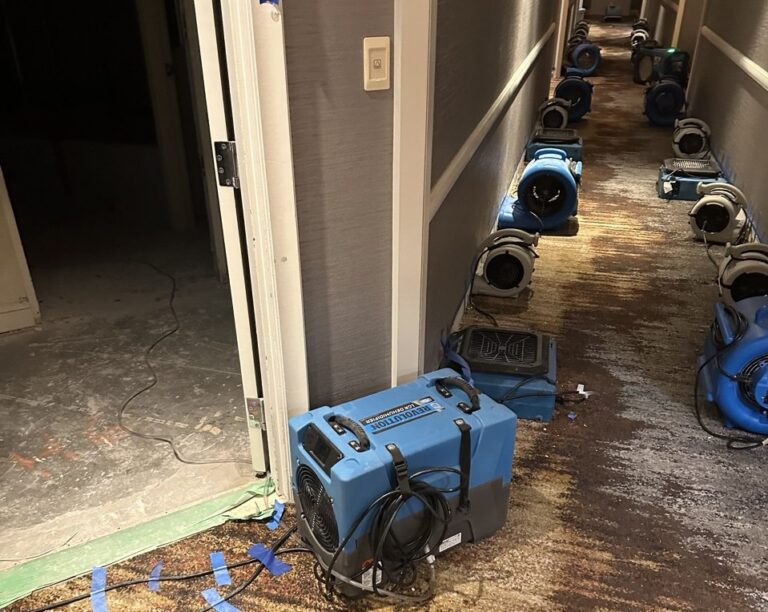
Where appropriate, air movers and dehumidifiers can support evaporation and water-vapour removal. Track temperature, relative humidity and material readings over time. Adjust placement, containment and access in response to observed trends. A dehumidifier collecting water is not proof that the subfloor or cavity has reached a suitable drying endpoint.
7.3 Material-specific decisions
Evaluate gypsum board, carpet, insulation, wood, engineered floors and masonry individually. Some clean-water-affected materials can be restored when promptly addressed and demonstrably dry; others require removal when contamination, physical deterioration, inaccessible saturation or manufacturer restrictions make drying in place inappropriate [2,3]. Avoid covering wet substrates with paint, new drywall or flooring.
7.4 When mould is present
Where visible or suspected mould requires remediation, the objective is to correct moisture causes and remove contamination without spreading it to clean areas. An unqualified claim that disinfectant spraying alone permanently resolves mould is not warranted. Project scope should account for containment, suitable cleaning or removal methods, protection of occupants and workers, and post-remediation verification [2,5].
8. Illustrative Decision Scenario (Hypothetical)
Consider a hypothetical Vancouver townhouse with a kitchen supply-line leak affecting the floor assembly and a ceiling below. No measurements, observations or outcomes in this example represent an actual Novaco case. At initial assessment the restoration team confirms source control, checks hazards, maps moisture and obtains readings at accessible surfaces and comparable unaffected reference locations.
Following bulk extraction, equipment might be deployed where risk assessment supports drying in place. During subsequent checks, the team notes whether moisture trends are declining at corresponding measurement locations. If surface readings decline but underside readings remain elevated or conditions are inaccessible, opening the assembly or changing the strategy may be warranted. The team does not infer microbial absence solely from the number of elapsed hours.
The final decision would be based on contamination assessment, material integrity, verified drying criteria and documentation of unresolved uncertainties. This is a reasoning exercise, not experimental evidence of treatment efficacy.
9. Documentation Framework
For transparent restoration records, document the reported loss date and source; observed wetting extent; electrical, structural and contamination screening; construction and material descriptions; moisture-map locations and instrument limitations; reference readings; temperature and humidity trends; equipment deployment and revisions; material preservation versus removal rationale; final verification; and any limitations or specialist referrals.
10. Discussion and Limitations
The principal operational finding is that a timely response is essential, yet time alone is an insufficient predictor of mould development. The biological processes of colonization, growth and visual detection differ, and publicly available general guidance should not be converted into a universal timeline. The significance of indoor dampness for health is well established at the population-guidance level, while exposure and health consequences for a particular occupant require more specific assessment [1].
This review does not estimate rates of mould growth, compare Vancouver homes to other cities empirically, establish safe species-specific thresholds or evaluate drying equipment through controlled trials. Any extension beyond the cited guidance is presented as a professional decision consideration, not original field evidence.
11. Conclusion
Preventing persistent dampness after water intrusion requires early source control, appropriate extraction, assessment of hidden moisture, material-specific drying or removal, contamination safeguards and documented endpoints. The commonly cited 24–48-hour guidance provides a practical prompt for action but is not a definitive biological deadline. Building owners and restoration professionals should base decisions on the observed conditions of the assembly and acknowledge uncertainty where access or measurement is limited.
References
- World Health Organization Regional Office for Europe. (2009). WHO guidelines for indoor air quality: dampness and mould. WHO publication.
- U.S. Environmental Protection Agency. Mold Remediation in Schools and Commercial Buildings. EPA guidance.
- U.S. Environmental Protection Agency. (2013). Moisture Control Guidance for Building Design, Construction and Maintenance. EPA moisture guidance.
- U.S. Environmental Protection Agency. A Brief Guide to Mold, Moisture and Your Home. EPA homeowner guidance.
- Centers for Disease Control and Prevention. Mold: prevention and cleanup after water damage. CDC guidance.
- Massachusetts Department of Public Health. Use of Moisture Measuring Devices for Evaluating Water Damage in Buildings. Technical guidance.
Related Novaco Resources
For field services and technical context, see Structural Drying and Dehumidification, Mold Remediation and the related structural drying technical review.