
Fast water extraction, structural drying, cleanup, and repair for flooded basements across Greater Vancouver and the Lower Mainland.
Whether the water came from a burst pipe, appliance failure, drainage issue, overflow, or exterior intrusion, Novaco responds quickly to remove standing water, trace hidden moisture, dry affected materials, and restore the damaged area.
1. Stop the source if it is safe.
2. Keep away from electrical hazards.
3. Move valuables from the wet area.
4. Call a restoration team before moisture spreads.

Basements are especially vulnerable because water often collects at the lowest level of a property. The visible puddle may be only part of the problem—moisture can also move behind baseboards, beneath flooring, into insulation, or up into wall assemblies.
The first priority is finding the source and determining how far the water has travelled. That assessment guides extraction, material removal, drying equipment, and the repair scope.
Supply lines, plumbing connections, and frozen or failed pipes can release large amounts of water into a basement.
Exterior water, drainage problems, or heavy rainfall can affect lower-level walls, floors, and stored contents.
Laundry equipment, utility sinks, water heaters, and mechanical-room failures can create fast-moving losses.
Contaminated water requires additional controls, cleaning, sanitization, and careful handling of affected materials.
Our basement restoration approach is built around three priorities: remove the water, dry the structure correctly, then repair what could not be saved.
Remove standing water and reduce the amount of moisture affecting flooring, walls, contents, and lower-level assemblies.
Use moisture readings, air movers, and commercial dehumidification to dry affected materials and monitor progress.
Repair or replace damaged drywall, insulation, flooring, baseboards, paint, and other finishes after drying is complete.
A flooded basement should not be treated as one uniformly wet room. Different materials hold and release moisture differently, so we map the affected area before deciding what can stay, what needs access, and where equipment should be placed.
We typically assess:
✓ Drywall and insulation
✓ Baseboards and lower wall cavities
✓ Flooring and underlay
✓ Wood framing and subfloor
✓ Mechanical or storage areas
✓ Contents located in the affected zone
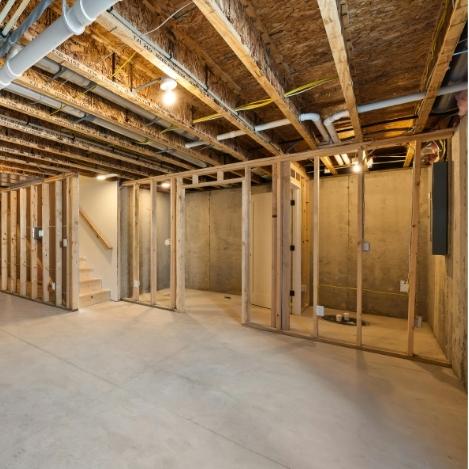
Every basement flood is different, but the restoration process should follow a controlled sequence so hidden moisture is not missed. We first identify the source and affected materials, then remove standing water, open or remove materials only where necessary, dry and monitor the structure, and complete repairs after moisture levels return to acceptable conditions.
Identify the source, affected materials, safety concerns, and the extent of moisture.
Remove standing water and begin protecting unaffected areas and contents.
Open or remove materials that are contaminated, badly damaged, or unable to dry effectively.
Install professional drying equipment and monitor moisture readings through the drying cycle.
Rebuild and finish the affected areas so the basement can return to normal use.
Basement finishes can stay damp long after visible water is gone. If moisture remains inside drywall, insulation, framing, flooring, or stored contents, conditions can develop that support mold growth. Proper drying and follow-up moisture checks are an important part of the restoration—not an optional extra.
When a basement water loss is insurance-related, clear documentation helps everyone understand what was affected and why specific restoration steps were required. We record the affected areas, moisture readings and mapping, equipment placement, drying progress, and the work completed during mitigation.
We also maintain project photos and monitoring notes as the basement dries, then document the transition into repair when reconstruction is required. Coverage decisions remain with the insurer and policy, but organized records can make communication between the property owner, property manager, adjuster, and restoration team much clearer from start to finish.
Document moisture levels, map affected materials, and track the areas that still require drying or further assessment.
Record visible conditions, equipment setup, drying progress, and key changes throughout the restoration process.
Document the transition from mitigation into repairs and the work completed to return the affected basement to normal use.
If it is safe, stop or isolate the water source, keep people away from electrical hazards or contaminated water, move valuables out of the affected area, and take photos of visible damage. Then arrange a professional moisture assessment so extraction and drying can begin before water spreads further.
Yes. Novaco provides 24/7 emergency response for flooded basements and lower-level water losses across Greater Vancouver and the Lower Mainland. The first priority is to assess the source, remove standing water where required, and determine the drying scope.
Common causes include burst or leaking pipes, failed water heaters, washing-machine or utility-room leaks, overflowing fixtures, drainage problems, rainwater intrusion, and sewage or drain backups. The restoration plan depends on the source and contamination level.
Yes. Water can travel behind baseboards, into drywall and insulation, beneath laminate or vinyl flooring, into underlay, and through wall cavities. Professional moisture testing helps determine how far the water has travelled beyond the visible wet area.
As soon as it can be done safely. The longer water remains, the more opportunity it has to absorb into porous materials such as drywall, flooring, insulation, wood framing, and stored contents, increasing the amount of drying or removal required.
Drying time depends on the amount of water, materials affected, temperature, humidity, airflow, and how deeply moisture has penetrated. Many projects require several days of controlled drying, with moisture readings used to confirm progress.
Not always. Some materials can be dried and retained, while materials that are contaminated, deteriorated, heavily saturated, or unable to dry effectively may need to be removed. The decision should be based on the type of water and actual material conditions.
Yes. Water quality depends on its source. Clean-water plumbing losses are different from drain or sewage backups, and contamination can increase if water sits or contacts unsanitary materials. Contaminated losses require additional cleaning, sanitization, and material-removal precautions.
Yes. Sewage and Category 3 water losses require additional safety controls. Depending on conditions, the work may include isolation, removal of contaminated porous materials, detailed cleaning, sanitization, air filtration, structural drying, and restoration.
Yes. Moisture that remains trapped in drywall, insulation, framing, flooring, or contents can create conditions that support mold growth. Proper extraction, structural drying, and moisture monitoring help reduce the risk of a secondary mold problem.
Sometimes. Whether flooring can be restored depends on the flooring type, underlay, water source, contamination, amount of saturation, and how quickly drying begins. Some materials can be dried, while others may need selective removal to access trapped moisture.
Depending on the loss, the restoration setup may include water extractors, commercial air movers, dehumidifiers, air-filtration equipment, and professional moisture meters. Equipment is selected and adjusted according to the affected materials and drying conditions.
Yes. We can document affected areas, moisture readings and mapping, project photos, equipment use, monitoring progress, and restoration work completed. Coverage decisions are made by the insurer, but organized records provide a clear project history.
Yes. After mitigation and drying are complete, Novaco can repair or replace damaged drywall, insulation, flooring, baseboards, paint, and other finishes required to return the basement to normal use.
Call Novaco for 24/7 basement water extraction, structural drying, cleanup, and repair across Greater Vancouver and the Lower Mainland.

Novaco Restoration is a Vancouver based restoration company offering comprehensive services including water damage restoration, fire and smoke damage repair, mold remediation, weather damage restoration, residential and commercial restoration, content management, repair and renovation, special cleaning and general cleaning. Licensed, insured, and dedicated to quality workmanship and customer satisfaction, we are here to restore your property and your peace of mind.
#1, 636 Clyde Ave, West Vancouver, BC
V7T 1E1
© 2026 Novaco Restoration & Construction Ltd. All rights reserved.